.png)
Water Testing at Hunter Wetlands Centre

Thanks to a generous grant from Aurizon, the Hunter Wetlands Centre has been able to purchase a new water quality meter, a surprisingly small device that makes a very big difference. This equipment now allows us to regularly monitor the health of our aquatic ecosystems with far greater accuracy, giving us clearer insights into what is happening beneath the surface of our ponds and swamps.
The meter is already in use across several key sites, including BHP Pond, Farm Dam, Brambles Pond and Water Ribbon Swamp. Each waterbody plays a different role in the broader wetland system, but two standout for their complexity: BHP Pond and Brambles Pond. BHP Pond, in particular, is a magnet for both nutrient-rich runoff and the 100-plus Magpie Geese that drop in daily. As charming as they are, they don’t exactly help keep nutrient levels down, and the combination creates recurring water quality challenges.

Earlier in the year we analysed both ponds after a blue-green algae bloom appeared. The bloom was most likely triggered by elevated phosphorus levels combined with the warm water temperatures typical of late summer. At the same time, we recorded a sharp spike in dissolved oxygen, which we believe was a direct result of the algal activity.
Since then, the bloom has largely subsided. Only small amounts of non-toxic algae remain, which is encouraging, but the story is far from over. As we head into summer, water temperatures are beginning to climb again. With hotter days comes increased evaporation, and as water levels drop, nutrient concentrations will almost certainly rise. In these conditions, even small changes can tip a system back toward algal dominance
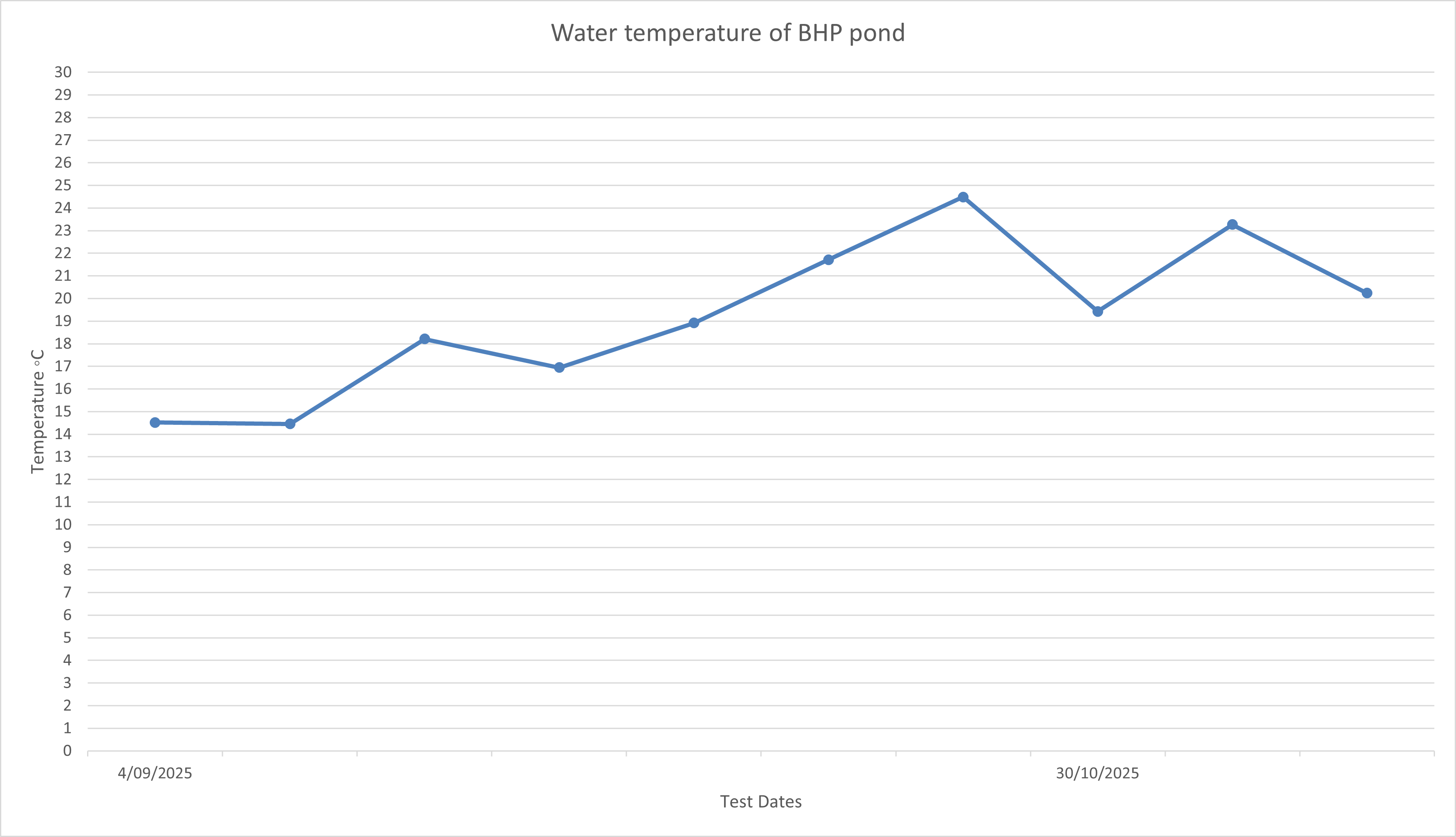
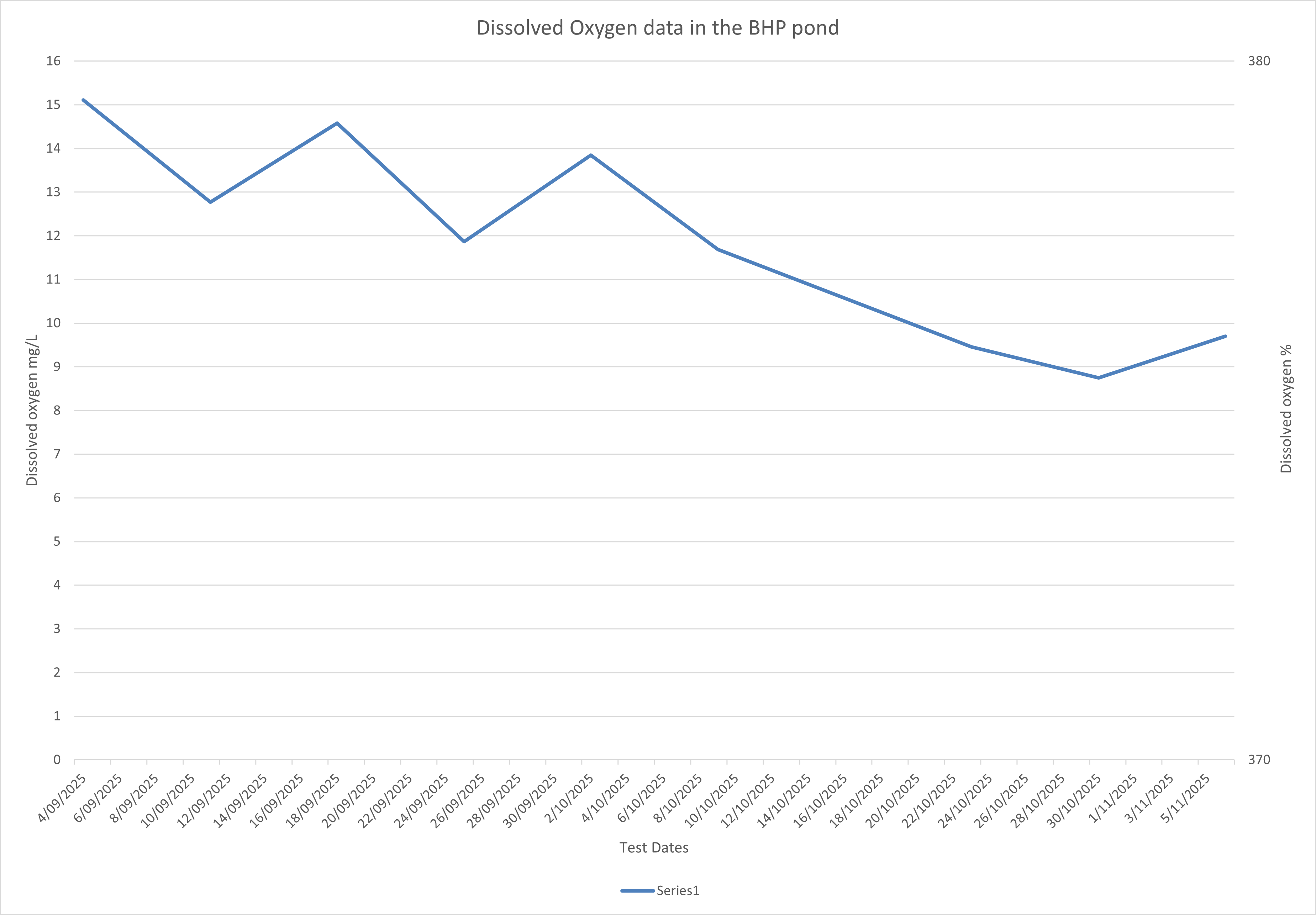
We are already observing early signs of this seasonal shift. Dissolved oxygen levels, previously high, are starting to fall. This can put stress on aquatic life, particularly fish and invertebrates that depend on stable oxygen levels to survive. It’s a reminder that wetlands are living, breathing systems, constantly balancing environmental pressures.
To help stabilise the ponds, we are in the process of installing circulation and aeration pumps. These systems will help move water, disperse nutrients and increase oxygenation. However, with water levels dropping more quickly than expected, installation may need to be delayed until autumn 2026 when levels are safer for equipment and installation crews.
In the meantime, the new water quality meter is proving invaluable. It gives us real-time data so we can respond early, adaptively manage the wetlands and make informed decisions to protect these vital ecosystems. As conditions continue to shift, this technology, combined with the ongoing work of our volunteers, will help us stay one step ahead in caring for our wetlands.


.jpg)
.jpg)